I was out for a drive when StrayPath flagged a stretch of road near Cross Creek as a scenic byway. So I took the turn.
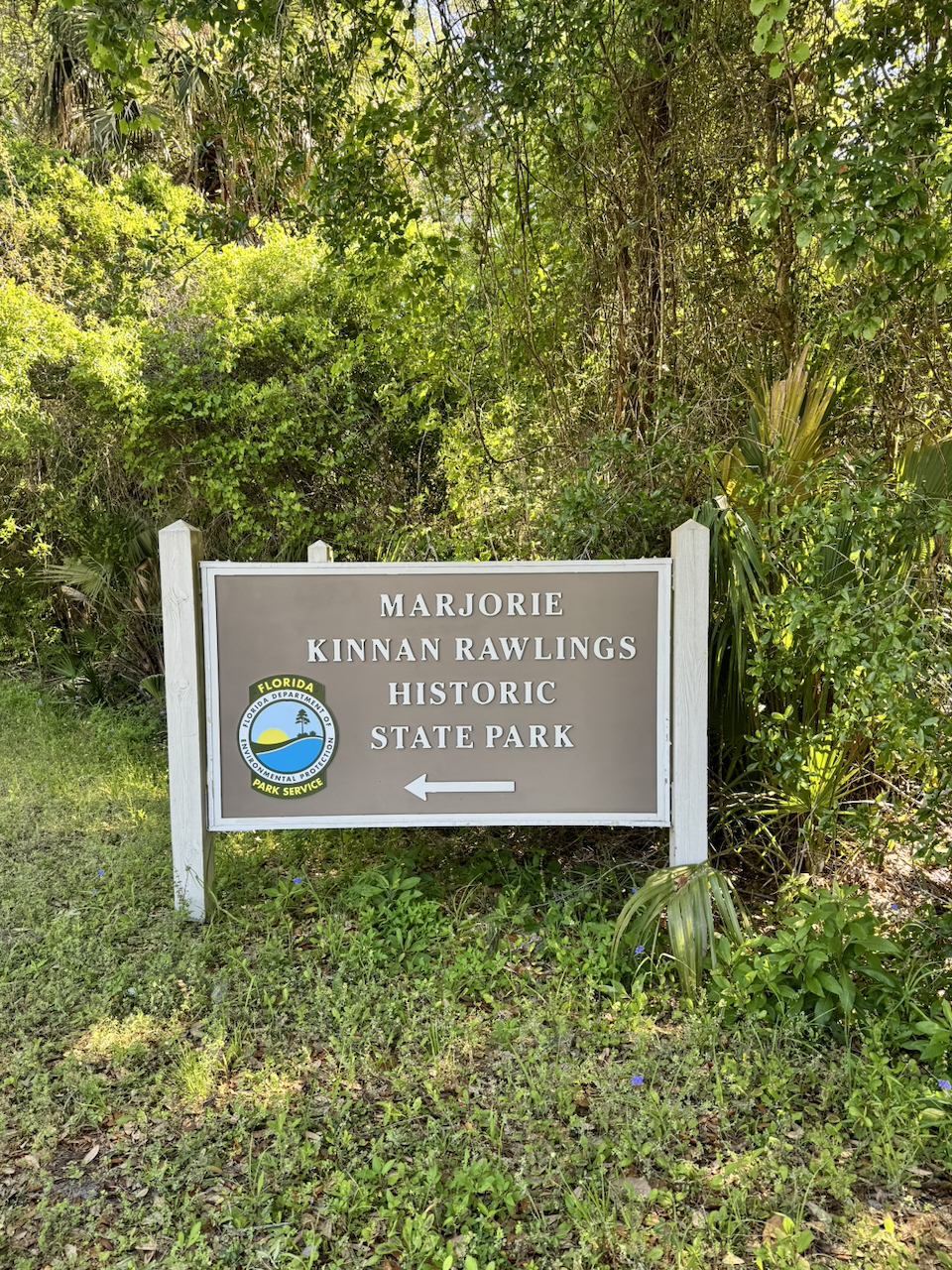
Then there was a brown sign at the road's edge: Marjorie Kinnan Rawlings Historic State Park, with an arrow pointing left. I pulled in.
I'll be honest: I had her mixed up with Marjorie Harris Carr, the conservationist who led the fight against the Cross Florida Barge Canal in the 1960s and 70s. Two different Marjories, both significant, both connected to this part of Florida. Rawlings was a writer. She moved from New York to a cracker farm in the Florida scrub, bought it sight-unseen, and set about actually working the land: orange groves, vegetable garden, tenant farming. She'd grown up in Washington, D.C. None of that prepared her for this.
The novel she wrote here, The Yearling, is set in this exact terrain. The scrub, the hammock, the hardscrabble farming life of north-central Florida in the post-Civil War era. It won the Pulitzer Prize in 1939. She also wrote Cross Creek, a memoir about her years on the farm, published in 1942. The creek separates Orange Lake from Lochloosa Lake. She described the place as remote, difficult, and, in some essential way she couldn't explain, hers.
The grounds
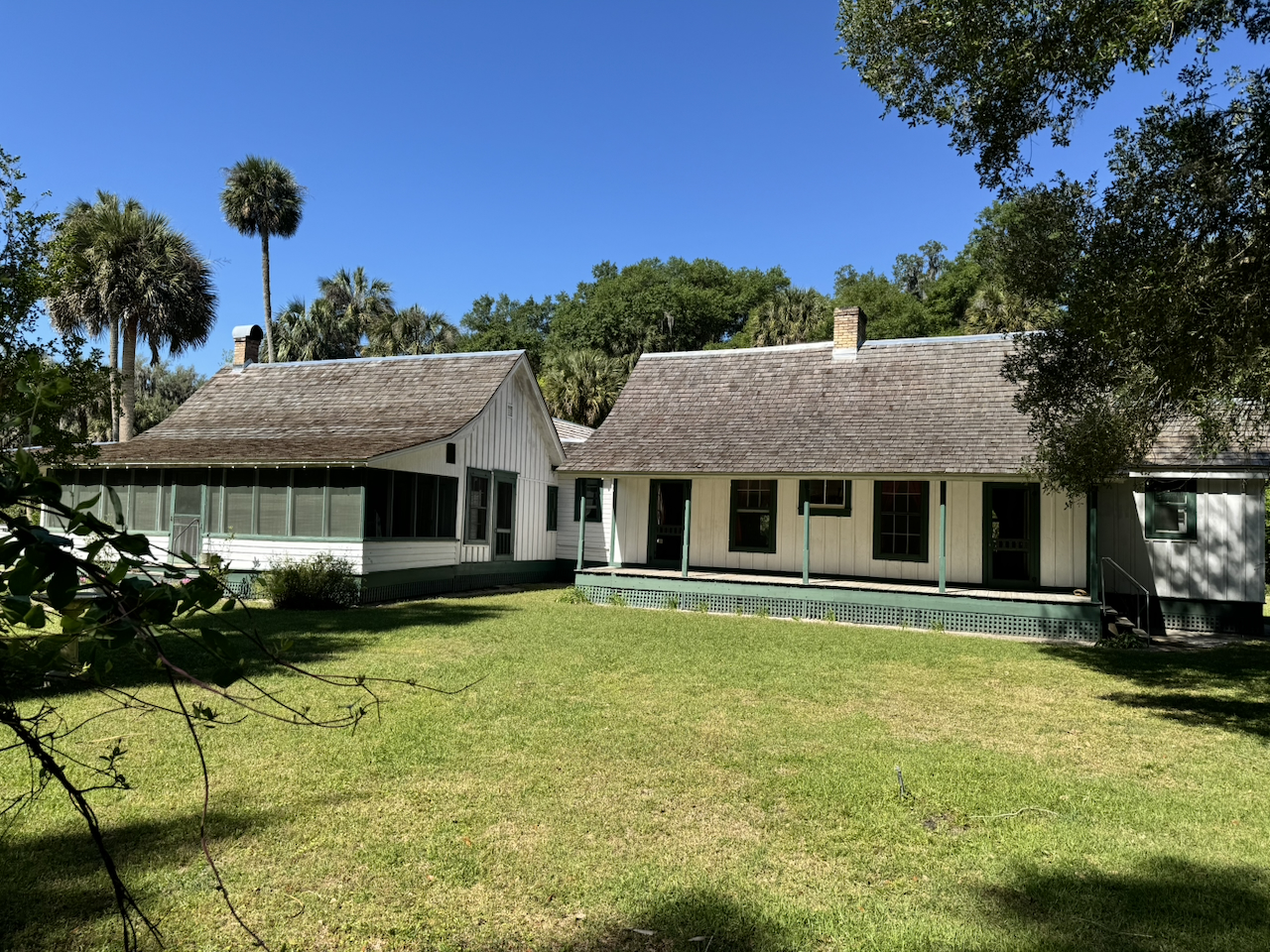
The farmhouse is a white frame structure, board-and-batten siding, tin roof, wraparound screened porch. It sits low on the property, surrounded by old oaks and palms. The park keeps it as it was during Rawlings' tenure, and guided tours walk visitors through the interior. I was there mid-morning on a weekday and had the grounds mostly to myself.
The lawn between the house and the outbuildings is wide and kept short. Old farm equipment sits under the trees in clusters, rusting in that unhurried way that Florida rust moves. A table in the yard. No explanation, just there.
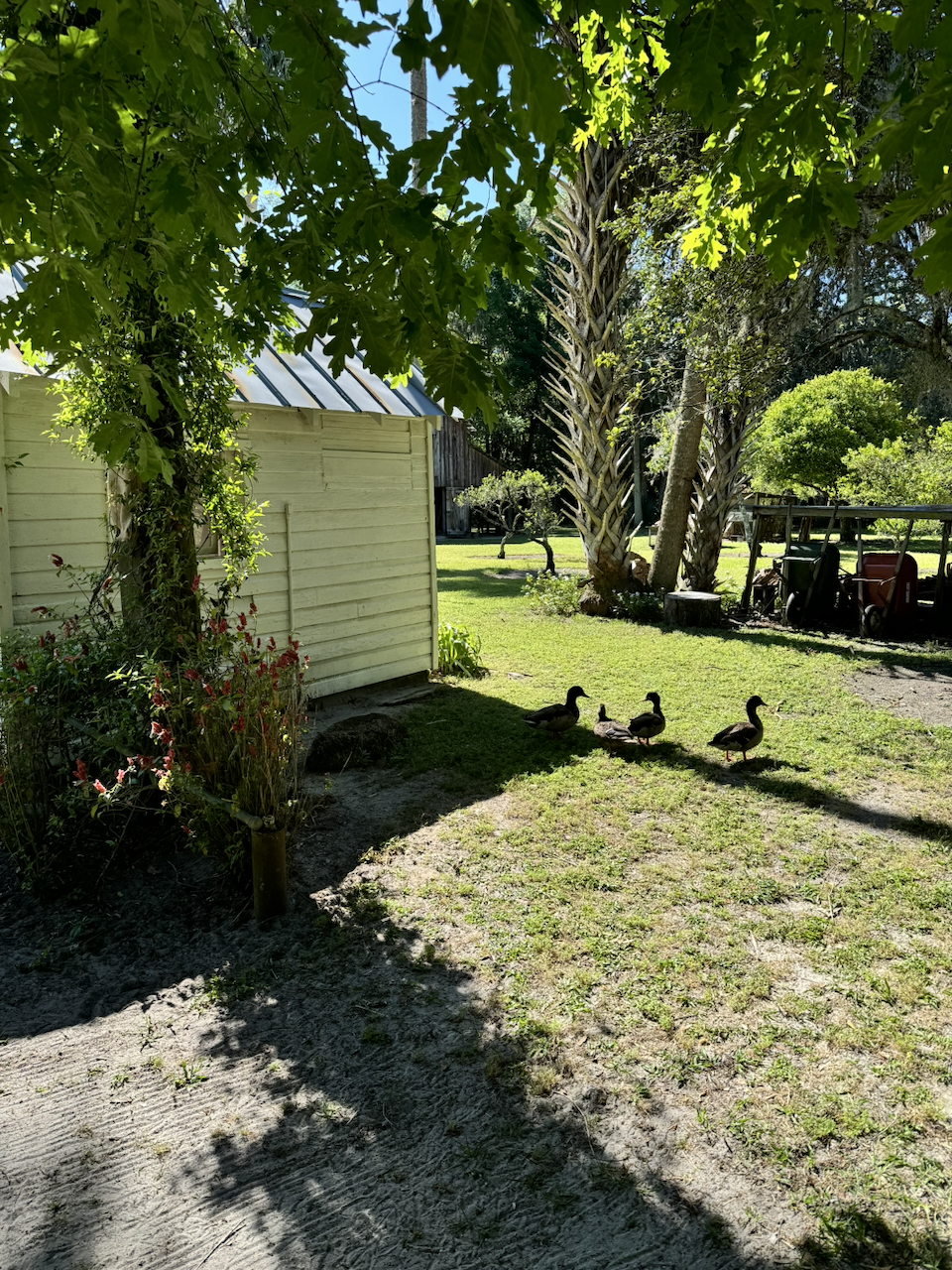
The farm still works
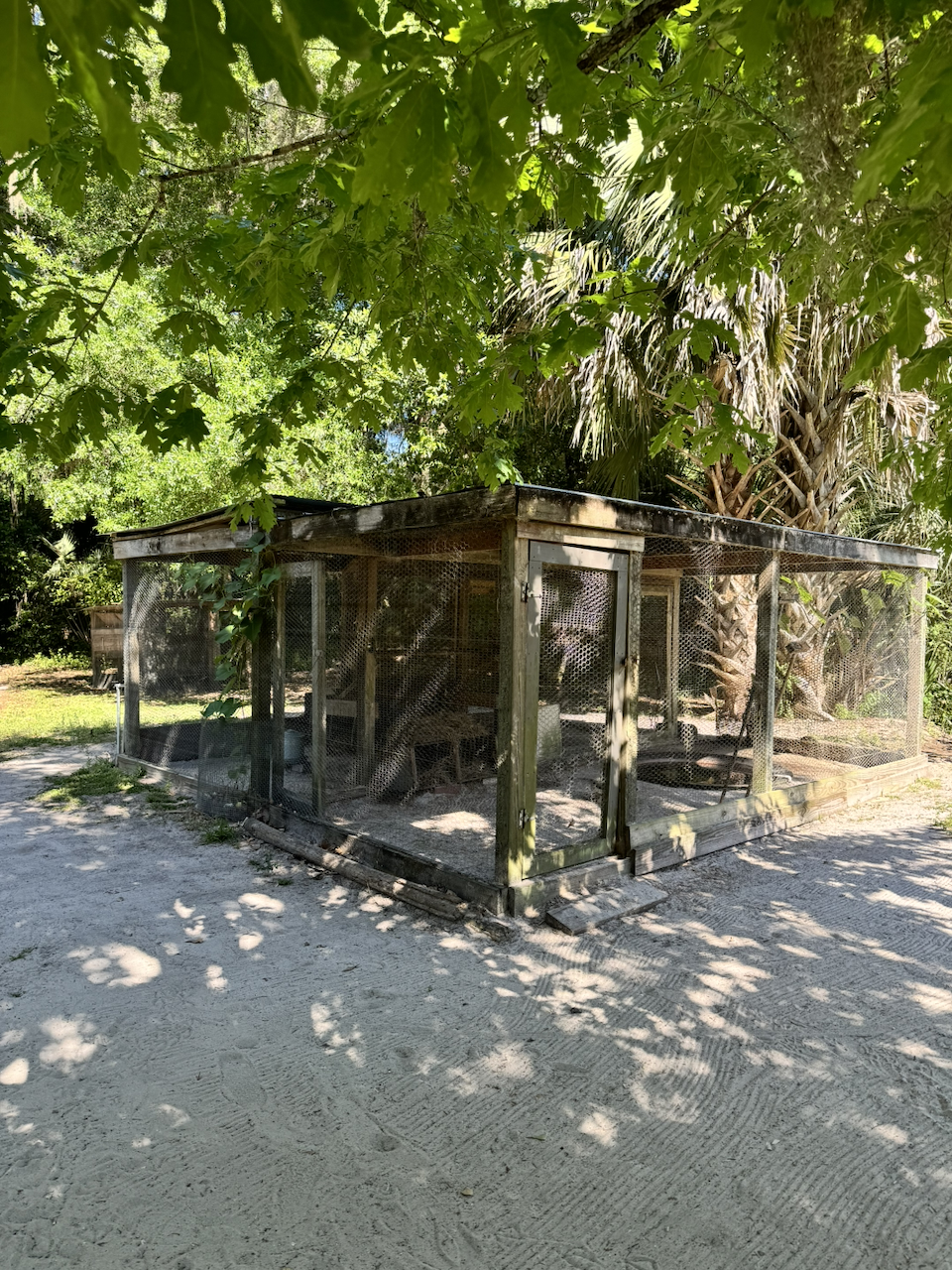
Past the house, there's a chicken coop. An outbuilding that might have been a smokehouse. Scattered across the property are the kind of structures that accumulate around working farms: useful, unbeautiful, slowly returning to their materials.
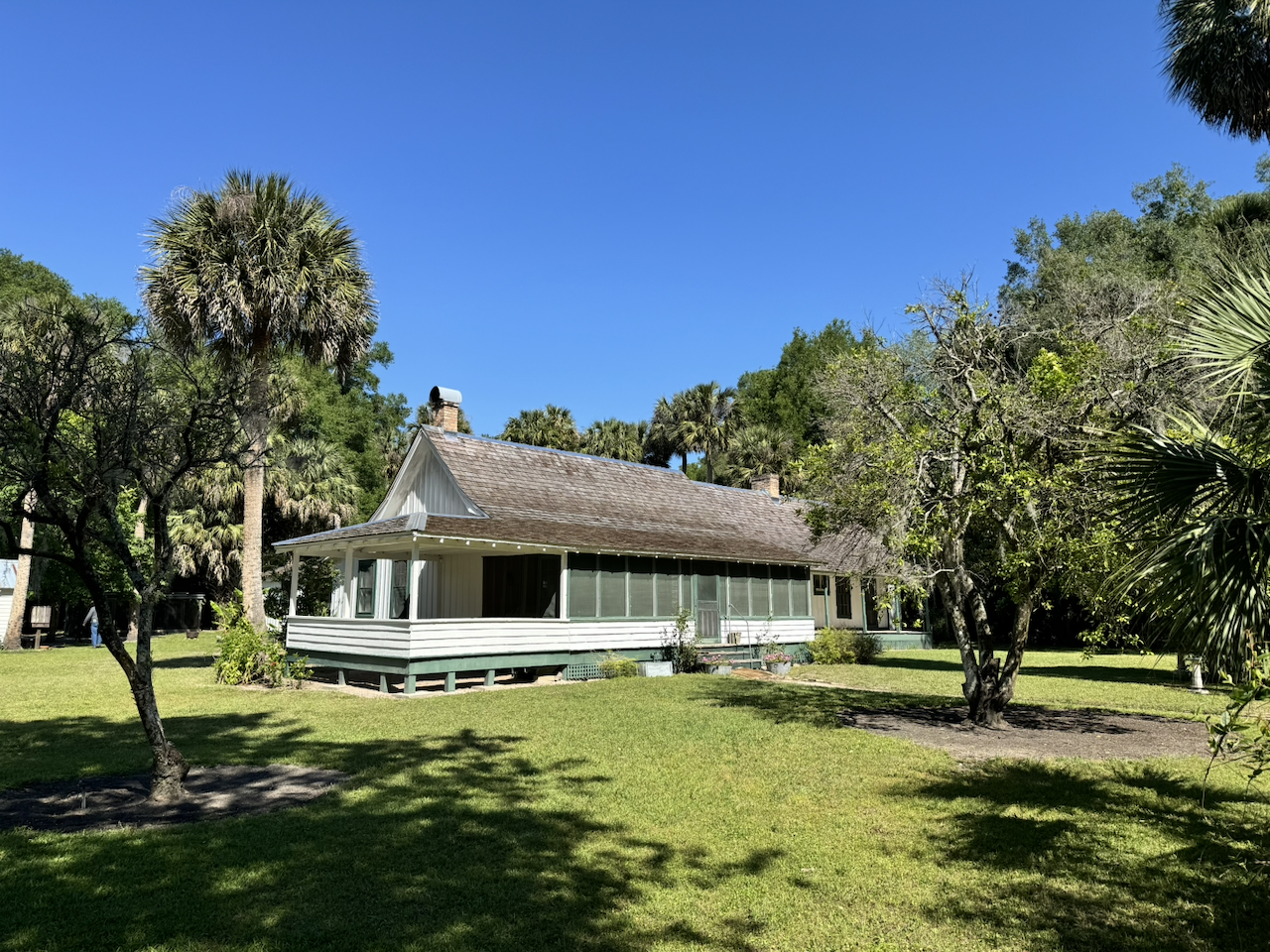
Rawlings didn't just live here in any tourist sense. She farmed. She employed tenant farmers. She bred cows and pigs. She picked oranges and pressed them for juice. She wrote about the labor honestly, without romanticizing it and without complaining about it in a way designed to make the reader feel she'd suffered appropriately for her art.
The work and the writing happened in the same place. The screened porch where she typed was also where she watched heat lightning over the hammock at night. She didn't separate those things.
The orange grove
There's a path through the orange grove that runs along the back of the property. The trees are old enough to have closed the canopy over the path, and in May the oranges are small and green and not ready for anything. The light comes through in patches. The ground is sandy and quiet.
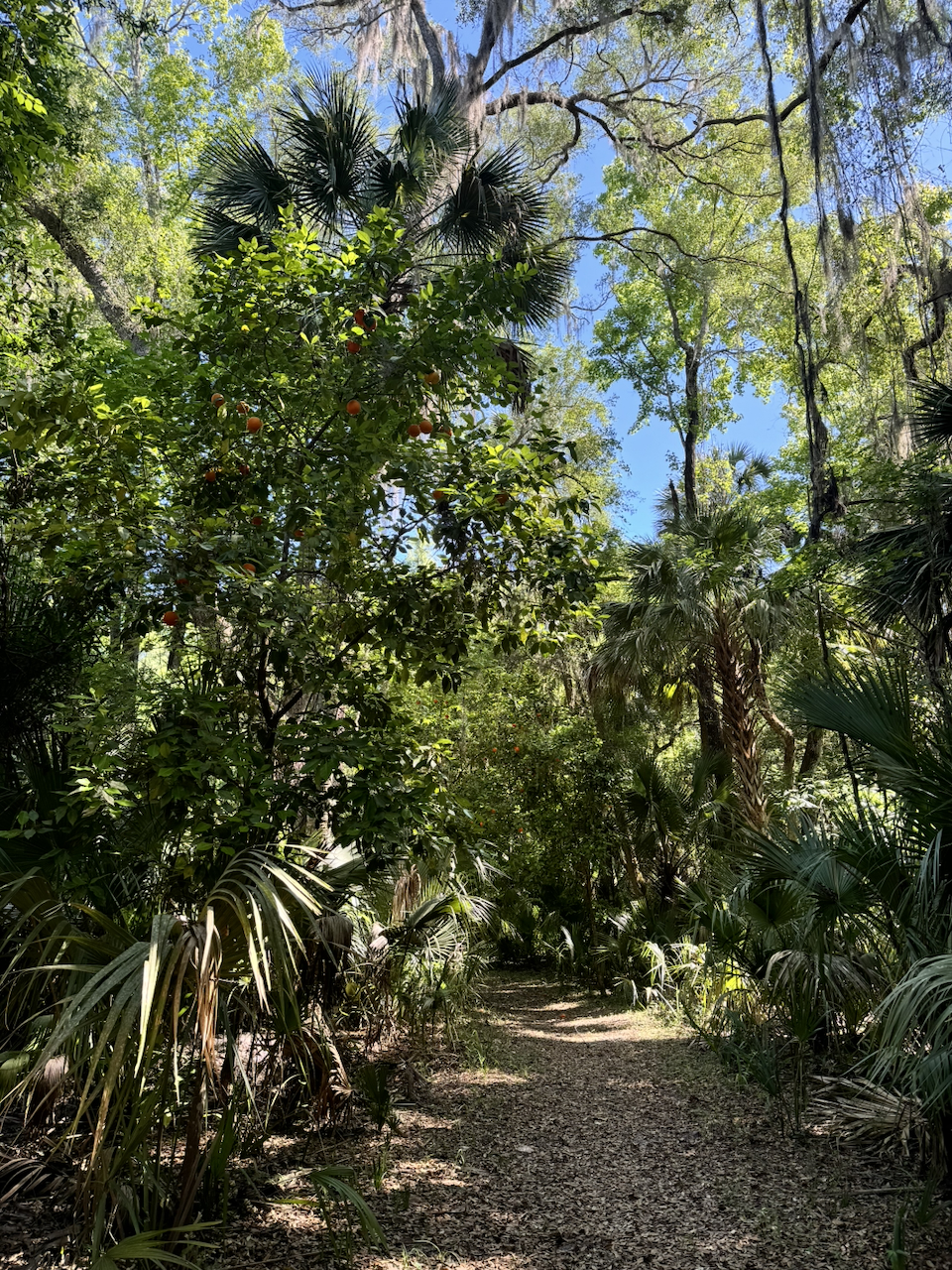
Florida citrus groves have a particular quality when they're not being harvested. Not scenic exactly, more like functional beauty, the kind that emerges from things arranged to serve a purpose over a long time. These trees have been here for most of a century. They'll probably outlast the park's interpretation of them.
The pond
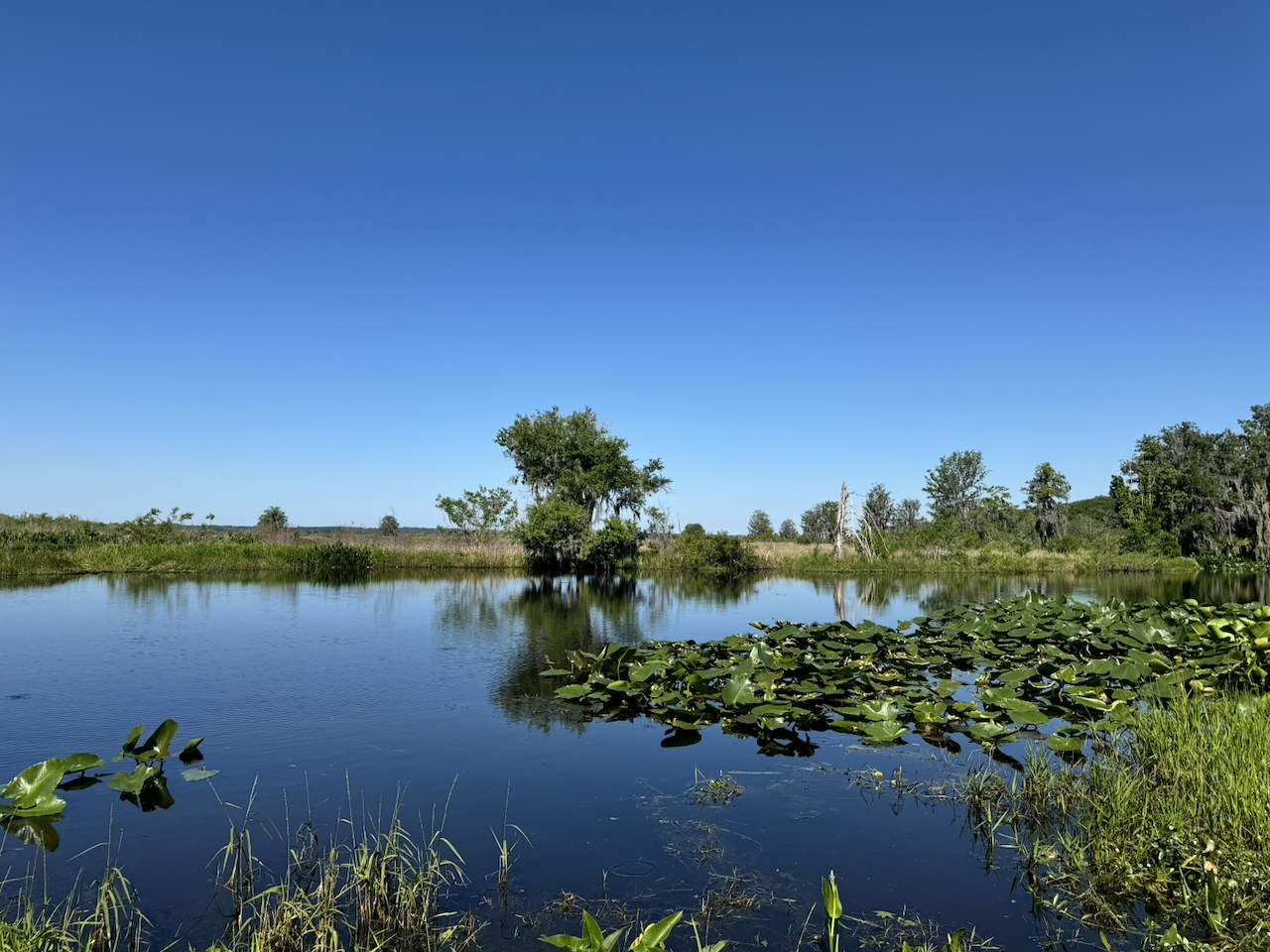
The property has a pond at its far edge. Lily pads covering a good portion of the surface, blue sky overhead, a line of cypress and water oak along the far bank. It looks like it came directly from a painting, which is partly because it did: Rawlings wrote this specific view into her work, and readers have been arriving with that image already formed in their minds for eighty years.
Standing there, it's easy to run the romantic version of what Rawlings' life here looked like. The quiet, the light, the self-sufficiency. The writer at work in the scrub, making something lasting out of difficult material.
Then the actual Florida variables come in. The heat, pre-air conditioning. The insects, which in this region and this era were a category of problem. No refrigeration, which changes the food situation considerably. Whatever's living in the pond. Rawlings wrote about all of this too, without flinching and without performing stoicism. She just noted it and kept going.
What this place is
Cross Creek is not far from where the Yearling Trail runs through the Ocala National Forest. The terrain is similar: scrub, hammock, sandy soil, the particular quality of light that comes through old oaks with Spanish moss. Rawlings' novel is set in that country, and the trail is named after it. The park and the trail are in dialogue with each other, even if most visitors to one don't make it to the other.
What the park preserves is something that's genuinely hard to find in Florida now. Not just the farmhouse or the grove, but the character of a place that predates the strip malls and the theme parks and the condo complexes that have consumed most of the state's available land. This is what the interior of north-central Florida looked like before all of that arrived. Scrub oak and sand and things growing where they want. A path through an orange grove that hasn't changed in a century.
That's worth an afternoon stop. It's worth pulling off the road when the sign appears.
Affiliate disclosure: The Yearling link above is an Amazon affiliate link. I earn a small commission if you purchase through it, at no extra cost to you.
The park is located at 18700 S. CR-325 in Cross Creek. Tours of the farmhouse interior run on specific days; check the Florida State Parks site before you go. The grounds are open to walk without a tour, and that alone is worth the visit. If you want to drive the route I took, here's the StrayPath route.

Written by
UI developer and federal design-systems engineer in Florida. I build accessible interfaces for federal health infrastructure and the open web.
Keep reading
All writing