The Ocala National Forest covers roughly 607,000 acres in north-central Florida. The southernmost and largest sand pine scrub forest in the world. Most people who know it know it from the springs: Silver Glen, Juniper, Alexander. They come in summer, by boat, in significant numbers. In January, on a Thursday, the forest is something else entirely.
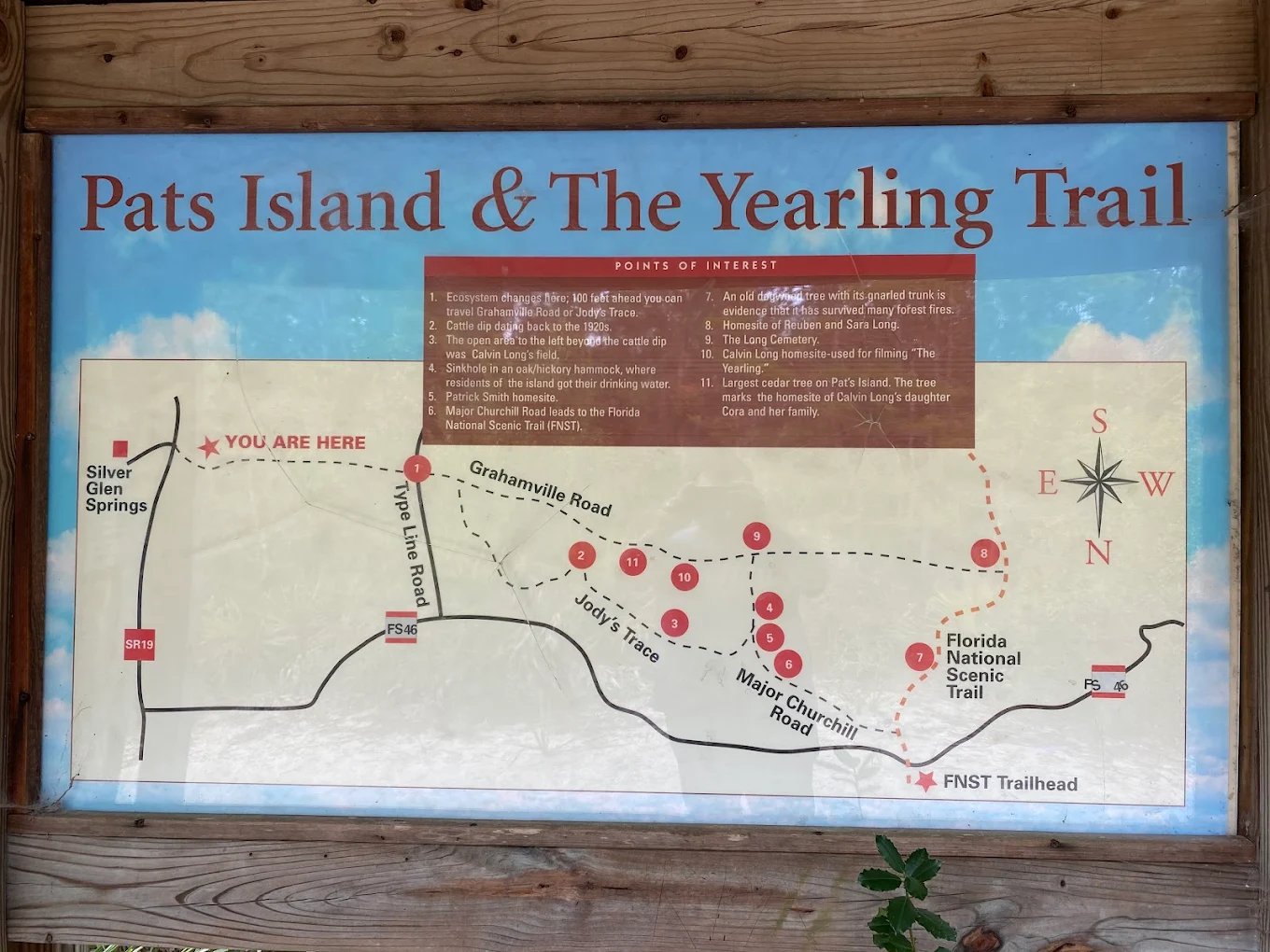
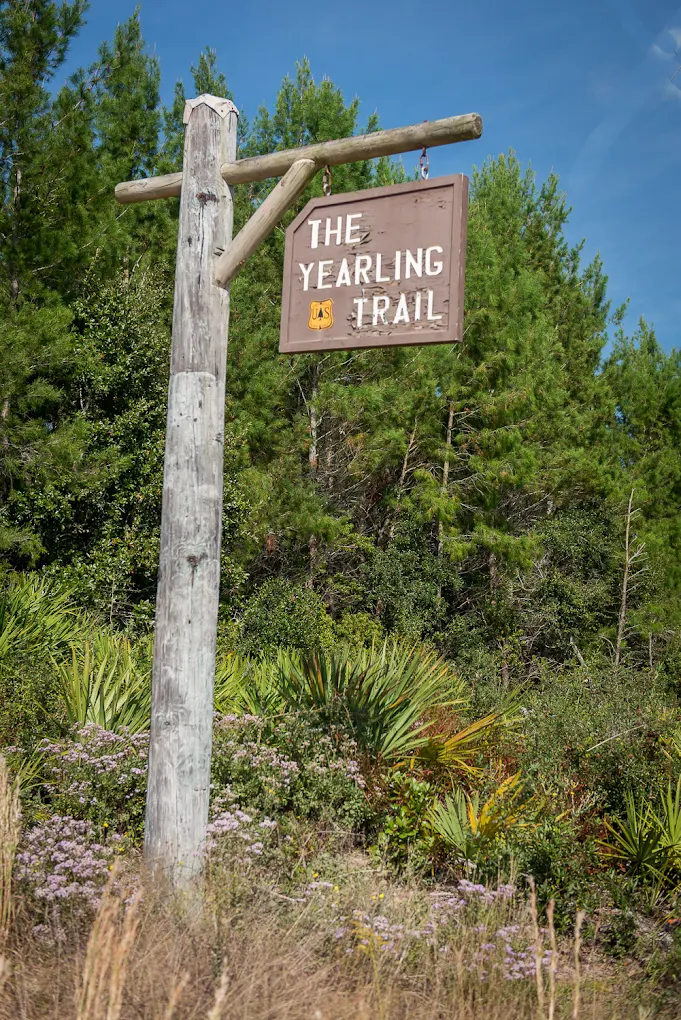
The Yearling Trail starts near the Pat's Island trailhead, southeast of Salt Springs. The name comes from Marjorie Kinnan Rawlings' 1938 novel about a boy and an orphaned fawn in this exact landscape. Scrub, prairie, and hammock at the edge of the Big Scrub, as locals called it. Rawlings won the Pulitzer for the book. She lived and farmed not far from here. Walking the trail with that knowledge in mind changes how you read the terrain.
The scrub
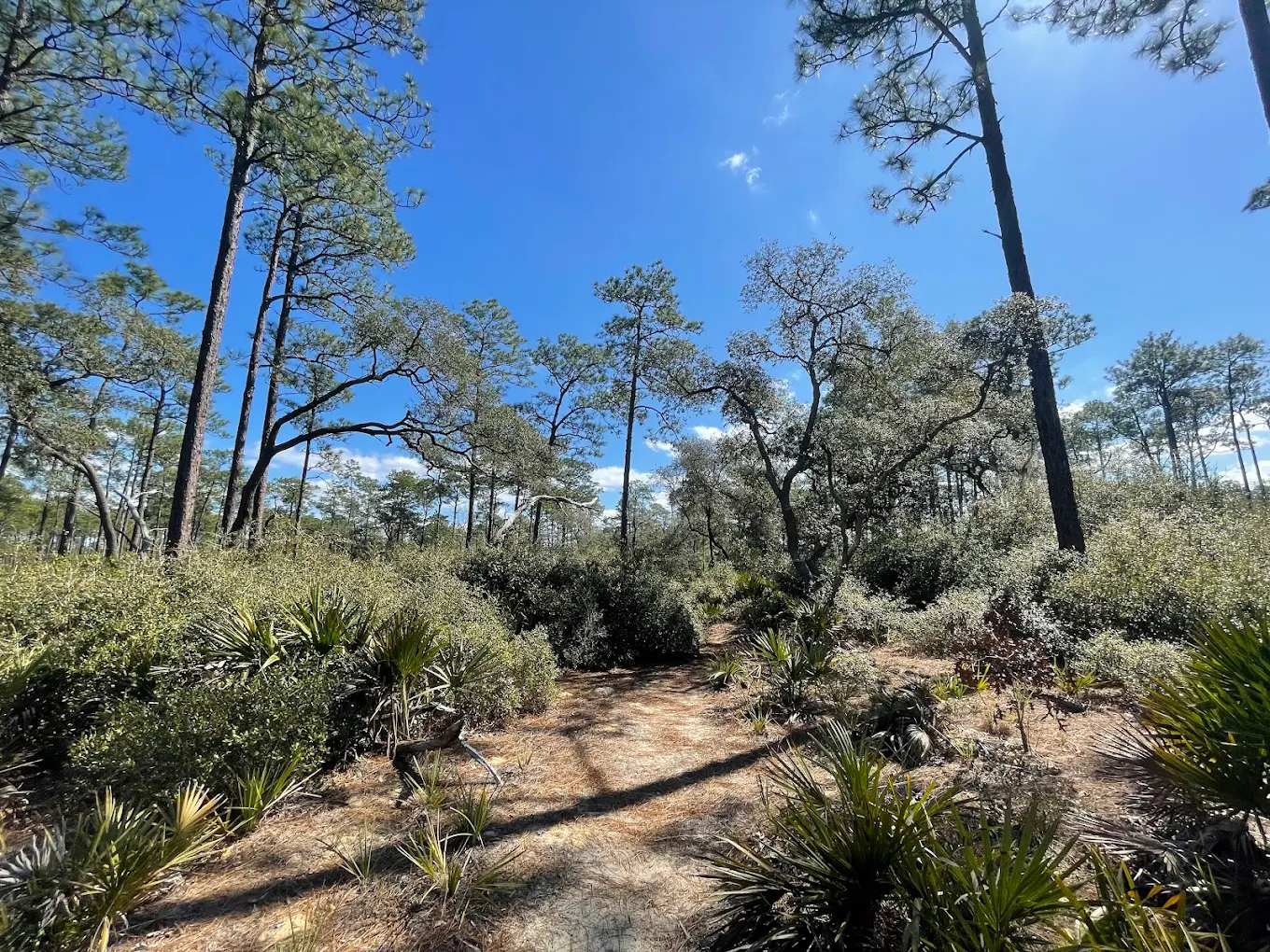
Florida scrub is not immediately impressive. It's a dry, nutrient-poor, fire-dependent ecosystem dominated by sand pine and a low, dense tangle of scrub oaks. Myrtle oak, sand live oak, Chapman oak. Mixed with rosemary flatwoods and bare patches of white sugar sand. It looks almost arid in January, when the cold has done its annual cosmetic work on the vegetation.
But scrub is extraordinarily species-rich at the invertebrate and reptile level. Sand skinks move through the sand just below the surface; you can sometimes spot the subtle ridge of displaced grains they leave behind. The Florida scrub jay. One of only a few bird species found exclusively within Florida. Nests here and will sometimes approach a stationary hiker with the kind of bold, evaluative curiosity that seems less like fearlessness than judgment. I sat still on a log for five minutes and had one land on the log about three feet to my left, look at me, decide I wasn't interesting, and leave.
Florida scrub jays are cooperative breeders. Offspring from previous years help raise the current year's young. They rely on an open, low-canopy scrub habitat maintained by periodic fire, and they've been declining steadily as scrub has been developed, fire suppressed, and the habitat closed in. They're federally threatened. Seeing one still feels like good luck.
The open prairies
The landscape opens as the trail moves from scrub into the prairie sections of Pat's Island. The name is used locally for the elevated, slightly drier patches that historically stayed above the water table and allowed different vegetation communities to establish. The grasses are brown and flat in January, but the openness itself has a quality. You can see a long way. A pair of sandhill cranes worked their way across the middle distance, moving with the unhurried purposefulness of large birds that have decided somewhere to be.
The contrast with the scrub is striking. One moment you're in a low tangle of vegetation that closes in on the trail to shoulder width, and the next you're in something almost meadow-like, sky above, distant treeline in three directions. The prairie sections feel like the forest exhaling.
The sinkholes
Central Florida sits on a thick layer of limestone. The Floridan Aquifer system, the same formation that feeds Silver Springs and the hundreds of other springs along the peninsula. When the water table drops or when the limestone dissolves gradually from below, the surface layer collapses into the void. The result is sinkholes, and the Ocala National Forest has them in abundance.
On the Yearling Trail, several sinkholes appear along the route, some dry and scrub-choked, some holding shallow seasonal ponds. The largest ones on this stretch are maybe forty feet across and fifteen or twenty feet deep. Not the dramatic collapse sinkholes that make the news, but quieter depressions that shape the hydrology around them, collect organic matter, and develop their own microecologies along the shaded slopes.
A sinkhole is the landscape admitting that the ground is not entirely solid. Florida's geology makes this admission constantly.
In the cool January air, the sinkhole interiors were noticeably warmer than the surrounding scrub. Cold air draining down the slopes, warmer air trapped at the bottom. You could feel it as a kind of ambient shift when standing at the rim. The ferns growing along the interior walls were greener than anything else in sight.
The homestead and the cemetery
Near the far end of the loop, the trail passes the site of an old homestead. Stone chimney standing, walls long gone, the cleared land mostly returned to oak hammock. A small cemetery sits nearby, a dozen or so graves, the oldest stones worn to near-illegibility by the combination of acidic soil, rain, and time. Most of the names you can still make out are from the late 1800s and early 1900s. These were families who came out to the Big Scrub before there was much infrastructure to support being there.
The homestead isn't preserved in any formal sense. There are no interpretive signs, no maintained perimeter. It just sits in the woods, decaying at the rate limestone and oak hammock allow, which is to say slowly. The chimney will probably outlast everything else by a century.
Standing at the cemetery in January, with the forest quiet around me and no one else nearby, the place felt less melancholy than I expected. More like a fact about what people do and where they go. They come to difficult places with thin soil and no infrastructure. They build things. The things outlast them at different rates. Eventually the scrub comes back.
The trail is just under eleven miles as a full loop, though there are shorter options. I did the full loop and was back at the car by early afternoon, having seen two pairs of sandhill cranes, one scrub jay, more gopher tortoise burrows than I counted, and a single deer that materialized from the scrub, looked at me for a long moment, and walked back into the vegetation without hurrying.
Winter is the right time for the Yearling Trail. There's something about the dormant scrub and the cold light and the absence of other people that makes the history easier to hear.